
How to Test and Verify High-Temperature Tape Quality: A Buyer's Complete Checklist
Introduction: The Hidden Cost of Cheap Tape
You ordered 10,000 rolls of polyimide tape. The price was 30% below market. Should you accept it? Here’s what 5 major buyers wish they’d tested before signing. In the B2B industrial tape market, price variations often signal massive differences in raw material quality, coating precision, and manufacturing consistency. A cheap roll of tape might save you pennies per unit, but if it fails during a reflow cycle or leaves conductive residue on a PCB, it could cost you thousands in scrapped assemblies and delayed shipments.
Verifying tape quality is not about trusting the supplier’s datasheet; it is about empirical validation. This comprehensive buyer’s checklist outlines the exact tests you must perform to ensure your high-temperature tape meets the rigorous demands of electronics manufacturing.
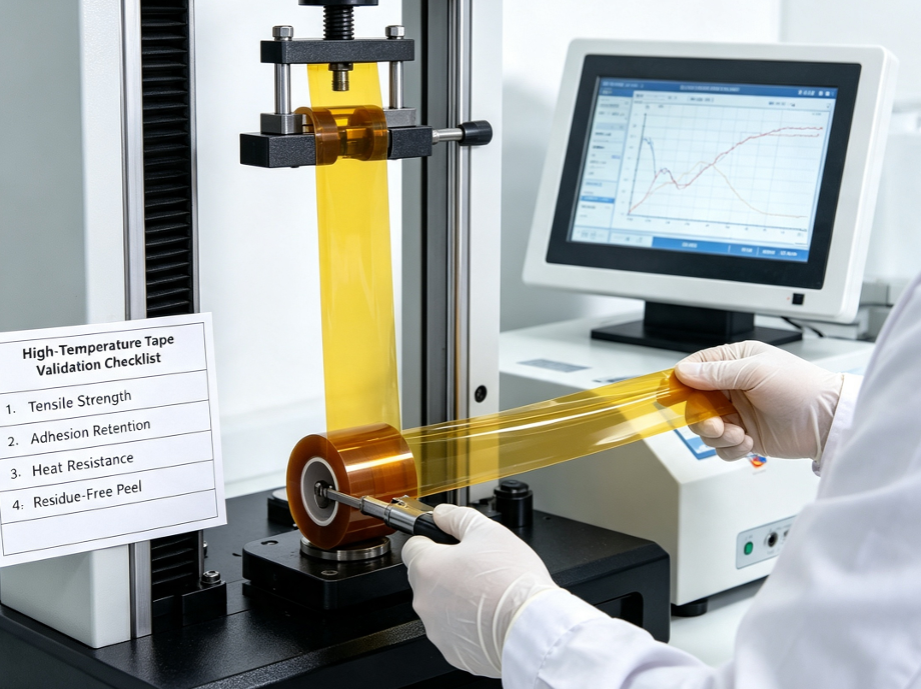
Why Tape Quality Varies So Much
Not all polyimide tapes are created equal. Quality variance stems from three main areas:
1. Raw Materials: Premium polyimide film and pure silicone adhesives cost significantly more than recycled films or modified acrylic adhesives.
2. Coating Process: Precision coating machines ensure uniform adhesive thickness. Poorly calibrated equipment leads to edge oozing, dry spots, and inconsistent adhesion.
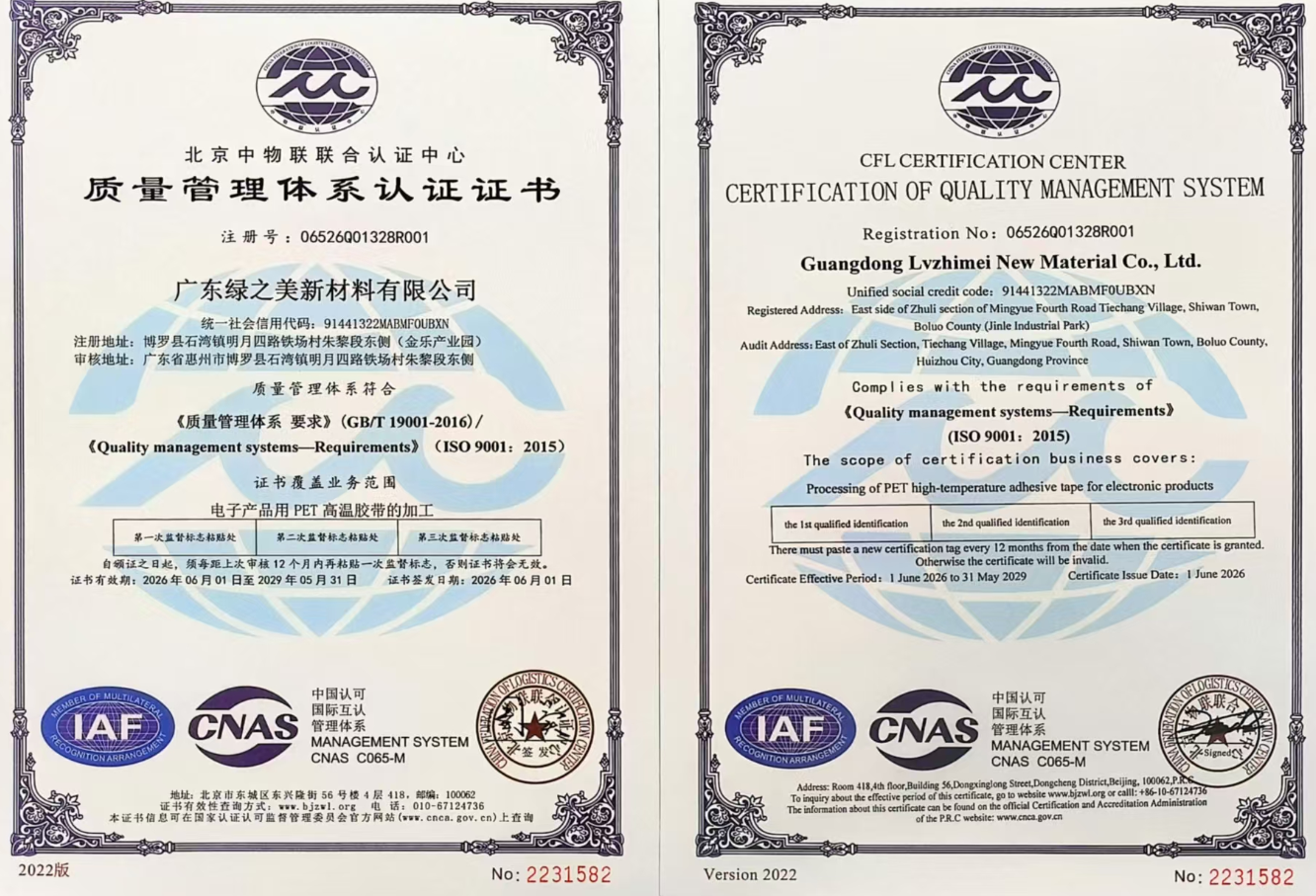
3. Quality Control: ISO9001-certified manufacturers like LVMEI perform batch testing. Non-compliant suppliers may skip critical tests to reduce costs.
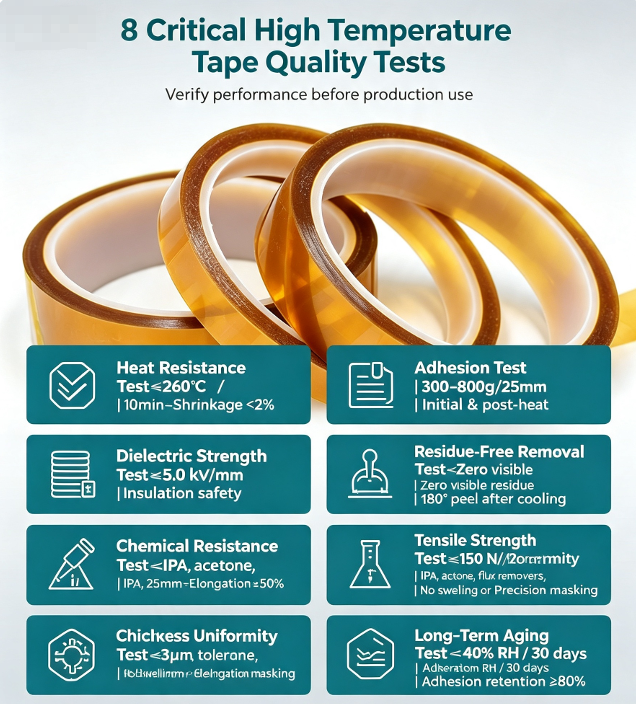
The 8 Critical Tests Every Buyer Should Require
1. Heat Resistance Test Expose the tape to 260°C for 10 minutes in a convection oven. - Measure: Shrinkage (should be <2%), discoloration, and film integrity. - Why it matters: Confirms the tape can survive peak reflow temperatures without degrading.
2. Adhesion Test (Initial & Post-Heat) Use a standard peel tester at 300mm/min. Test initial adhesion and adhesion after 260°C/10min exposure. - Target: 300g-800g/25mm depending on the model. - Why it matters: Ensures the tape stays in place during processing but removes cleanly afterward.
3. Dielectric Strength Test Apply increasing voltage across the tape until breakdown occurs. - Target: ≥5.0 kV/ mm. - Why it matters: Critical for electrical insulation and preventing short circuits in high-voltage applications.
4. Residue-Free Removal Test Apply tape to a glass or FR4 panel, bake at 260°C for 10 minutes, cool to room temperature, and remove at a 180° angle. - Target: Zero visible residue to the naked eye or under UV light. - Why it matters: Residue causes solderability issues and requires costly cleaning.
5. Chemical Resistance Test Expose the tape to common solvents (IPA, acetone, flux removers) for 5 minutes. - Target: No swelling, delamination, or adhesive softening. - Why it matters: Ensures compatibility with PCB cleaning and conformal coating processes.
6. Tensile Strength and Elongation Test Pull the tape until it breaks using a tensile tester. - Target: Tensile strength ≥150 N/25mm; Elongation ≥50%. - Why it matters: Prevents the tape from snapping during automated dispensing or manual application.
7. Thickness Uniformity Test Use a precision micrometer to measure total thickness at multiple points across the roll width. - Target: Tolerance of ±3μm. - Why it matters: Thickness variation causes stacking issues in battery manufacturing and uneven masking in SMT.
8. Long-Term Aging Test Store tape at 40°C/90% RH for 30 days, then re-test adhesion and heat resistance. - Target: Adhesion retention ≥80% of initial value. - Why it matters: Validates shelf life and storage stability
Test Equipment and Methods
To perform these tests accurately, your lab or third-party testing facility should have: - Precision Peel Tester: For adhesion and tensile tests. - Convection Oven: Capable of stable 260°C. - Dielectric Withstand Tester: For insulation verification. - Digital Micrometer: Resolution of 0.001mm. - UV Inspection Lamp: For residue detection.
Acceptance Criteria Table
Test | Method | Pass/Fail Standard |
Heat Resistance | 260°C / 10 min | Shrinkage <2%, No charring |
Adhesion | PSTC-101 | Within ±15% of spec |
Dielectric | ASTM D149 | ≥5.0 kV/mm |
Residue | Visual/UV | Zero residue |
Tensile | ASTM D3759 | ≥150 N/25mm |
Thickness | Micrometer | ±3μm tolerance |
Red Flags When Evaluating Suppliers
• Refusal to provide test reports: If they can’t show batch-level test data, walk away.
• Vague specifications: “High temperature” is not a spec. Demand exact °C and duration.
• No ISO certification: Lack of ISO9001 means no systematic quality management.
• Unusually low price: Premium silicone and polyimide have fixed commodity costs. Deep discounts mean corners were cut.
How LVMEI Ensures Quality
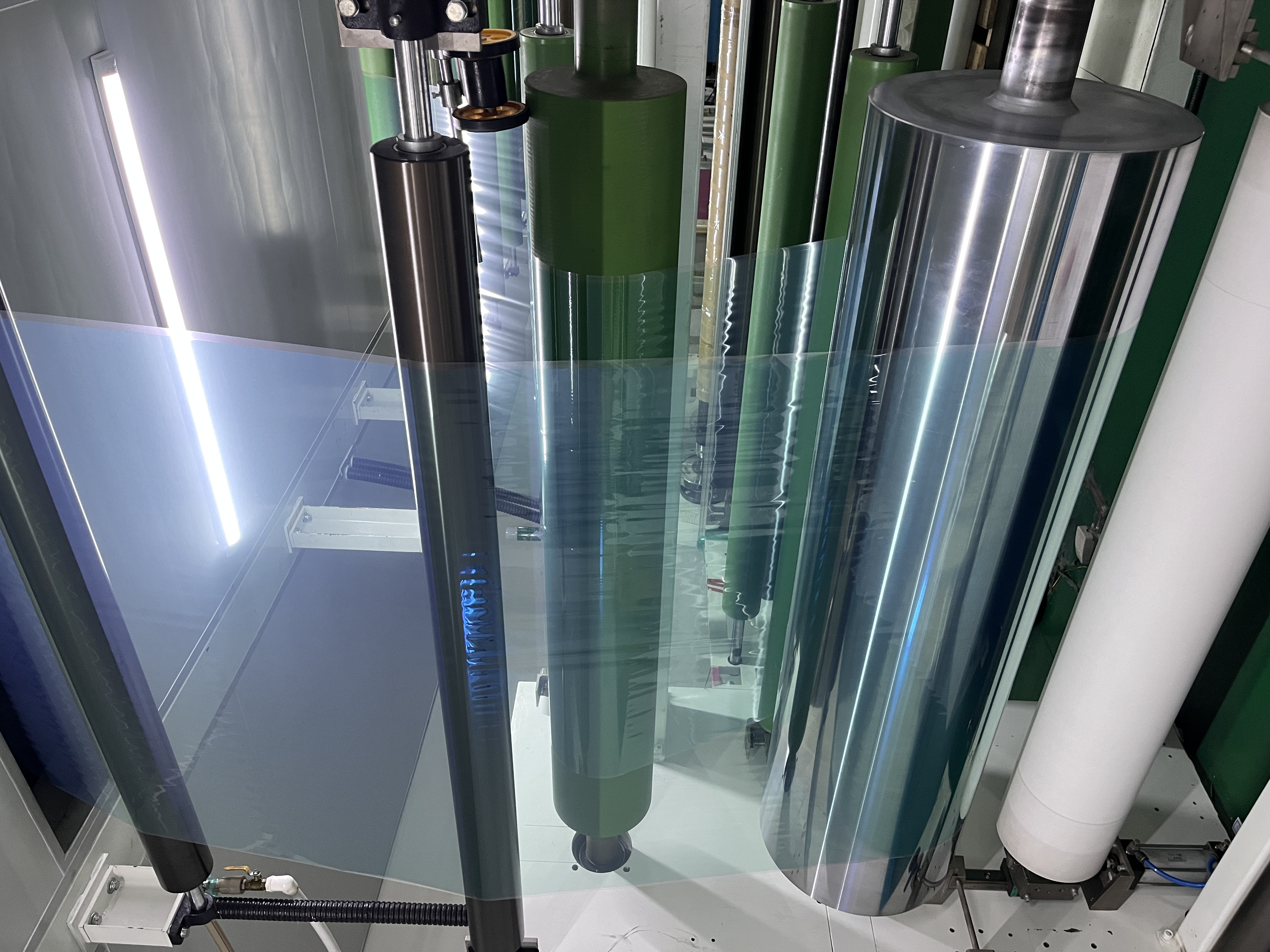
At Hunan Lvzhimei New Material Technology Co., Ltd, quality is engineered into every roll. As an ISO9001-certified manufacturer with in-house coating lines, we perform 100% batch testing on all critical parameters. Our advanced production equipment, including precision coating and laminating machines, ensures thickness tolerances of ±3μm and consistent adhesive application. Every roll of LVMEI tape is traceable from raw material inspection to final shipment.
Buyer’s Pre-Purchase Checklist
Before placing your next order, verify:
- [ ] Supplier provides complete TDS and batch test reports
- [ ] Tape meets your specific temperature and adhesion requirements
- [ ] Residue-free performance is guaranteed and tested
- [ ] Thickness tolerance matches your application needs
- [ ] Supplier is ISO9001 certified
- [ ] Samples have been tested in your actual production environment
FAQ Section
Q: Can I use the same tape for SMT and battery manufacturing?
A: While both require high heat resistance, battery applications often demand stricter thickness tolerances and specific chemical resistance to electrolytes. Always validate tape for the specific application.
Q: How long does high-temperature tape last in storage?
A: When stored at 20-25°C and <60% RH, premium polyimide tape typically has a shelf life of 12-24 months. Always verify adhesion before using aged stock.
Summary & Next Steps
Never gamble with tape quality. Implementing this 8-point testing checklist will protect your manufacturing line from costly failures and ensure consistent product quality. Partnering with a transparent, ISO-certified manufacturer like LVMEI gives you the peace of mind that comes with verified performance.
Don’t risk your next production run. Contact LVMEI today to request a free sample kit and complete test reports for our K-series polyimide tapes. Let our engineering team help you validate the perfect tape for your application. Visit lvmeikapton.com to get started.